1Self & body
Tanu Bhava
The temple of the self. Lal Kitab calls it the 'throne' — whatever sits here colours your whole life and health.
लाल किताब · A living tradition
Explore the nine grahas, their house readings and traditional upay in one flowing guide. Choose a theme to find reflective practices you can pair with thoughtful, real-world action.
09
Grahas
12
Houses
01
Connected guide
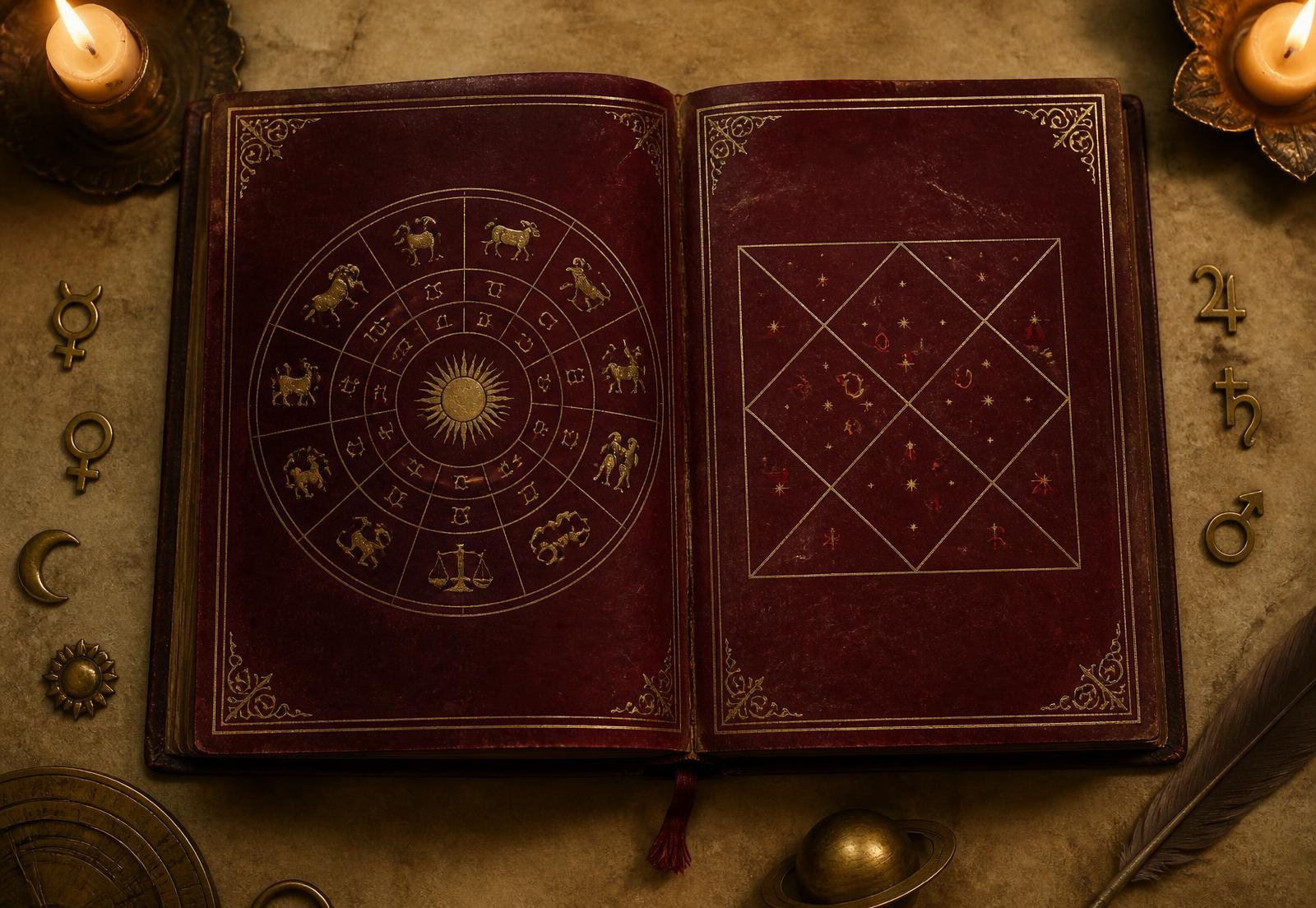
A guide for reflection
Small steps. Steady practice.
नवग्रह
Tap any card to open its animated field note: significations, house-by-house reading, and traditional practices.
The red book lens
Explore a reading as a prompt for reflection, not a fixed prediction. In this tradition, the same graha can express differently from one house to another.
The temple of the self. Lal Kitab calls it the 'throne' — whatever sits here colours your whole life and health.
The treasury and the tongue. Money is earned or lost here by how you speak and how you keep family bonds.
The house of effort. Malefics here become allies — Lal Kitab treats it as a place where boldness pays.
Foundation, mother, land and mental peace. A wounded 4th house shows itself as a restless house and heart.
Progeny, creativity and past-life merit. Lal Kitab links it strongly to the fate of one's children.
The battlefield. Rahu, Mars and Saturn thrive here, destroying enemies and illness alike.
The mirror. Lal Kitab holds that the conduct of a spouse reflects the native's own karma here.
Hidden matters, inheritance, sudden change. Saturn is comfortable here; soft planets suffer.
The house of luck, father and faith. Lal Kitab insists fortune only opens where dharma is kept.
Pure karma. Saturn here is a blessing — Lal Kitab calls it 'Saturn on his own throne of work'.
The house of income and networks. Rahu here is famously fruitful, delivering unexpected profit.
Expenditure, foreign lands, sleep and moksha. What is given away here returns as peace.
ऋण · उपाय · सेवा
Tap a card to unfold a plain-language note. Lal Kitab vocabulary can vary across editions and teachers; use these as introductory study notes.
Rinn is commonly translated as debt. In Lal Kitab, it can be used as a symbolic lens for obligations and patterns involving family, conduct, or relationships—not just money owed.
Ask what responsibility can be met with honesty and care.
Rinn Mukti describes the idea of easing or settling a debt through appropriate conduct, responsibility, and traditional upay. It should not be read as a guaranteed result.
Pair reflection with a practical, ethical step you can take.
An upay is a traditional remedy or practice associated with a chart reading. Lal Kitab remedies often emphasize simple acts, consistency, and personal conduct.
Keep a practice safe, affordable, and freely chosen.
Totke are particular traditional acts or observances. Instructions vary between sources and practitioners, so understand the practice before following it.
Avoid anything unsafe, coercive, or financially burdensome.
Daan means giving or charity. In remedial practice it is traditionally offered without expectation; generosity should remain voluntary and within one's means.
A small, respectful act of help is enough.
Seva is service. Lal Kitab remedies may emphasize respectful care for family, elders, workers, animals, or the community as part of responsible conduct.
Offer practical help while respecting boundaries and consent.
ग्रह संबंध
Follow the moving ribbon for a quick introduction. Pause it with a hover, touch, or keyboard focus; swipe horizontally to explore at your own pace.
A graha treated as established or fixed within a particular Lal Kitab reading. Its role is understood through the Teva and surrounding placements.
A term used for a graha read through dharma, responsibility, and conduct. Its interpretation depends on its house and chart relationships.
Literally, a “blind” graha. The phrase points to a reading where a planet’s influence is obscured or difficult to assess; consult the full chart context.
A “blind chart” expression used in some Lal Kitab discussions. Usage can differ by source, so it is best understood with the specific chart rule being applied.
Grahas considered in comparison or opposition. Their house placements and effects are weighed together rather than interpreted in isolation.
An artificial or derived graha: a chart relationship assigned by a Lal Kitab rule, not an additional physical planet.
Traditional terms are presented as a general glossary, not as a chart-specific reading. Exact usage may vary by Lal Kitab edition and practitioner.
उपाय · practice
Choose a life theme to explore grahas traditionally associated with it. Treat each upay as a cultural or reflective practice—not a promise or substitute for practical support.
Your reflection path
Choose one small, repeatable practice; pair it with a practical next step.
Speech, intellect, trade
Traditional practices to explore
Karma, discipline, delay
Traditional practices to explore
Soul, father, authority
Traditional practices to explore
Start with one safe, affordable practice that feels meaningful to you. Pair it with an actionable step—such as a conversation, a budget review, or asking a qualified professional for support.